
MacDonald Uncorked
Alex MacDonald: Napa heritage, old vines, and some pretty guitars

Quick intro about MacDonald: brothers Alex and Graeme MacDonald make some of the most sought-after wines in Napa Valley. Their family has been farming a sacred plot of the legendary To-Kalon vineyard for generations, and for 60 years, they sold their grapes to Robert Mondavi, who used the grapes in his Reserve and early Opus One bottlings, and referred to their grandparents as “the best grape-growers in Napa Valley”. Some time after Mondavi sold to Constellation Brands, Alex and Graeme started labeling their own wine. With reportedly over 13,000 people on the waitlist, the wines fetch sky-high prices on the secondary market. But the MacDonald brothers are down-to-earth as ever. Hope you guys enjoy my interview with Alex as much as I did.
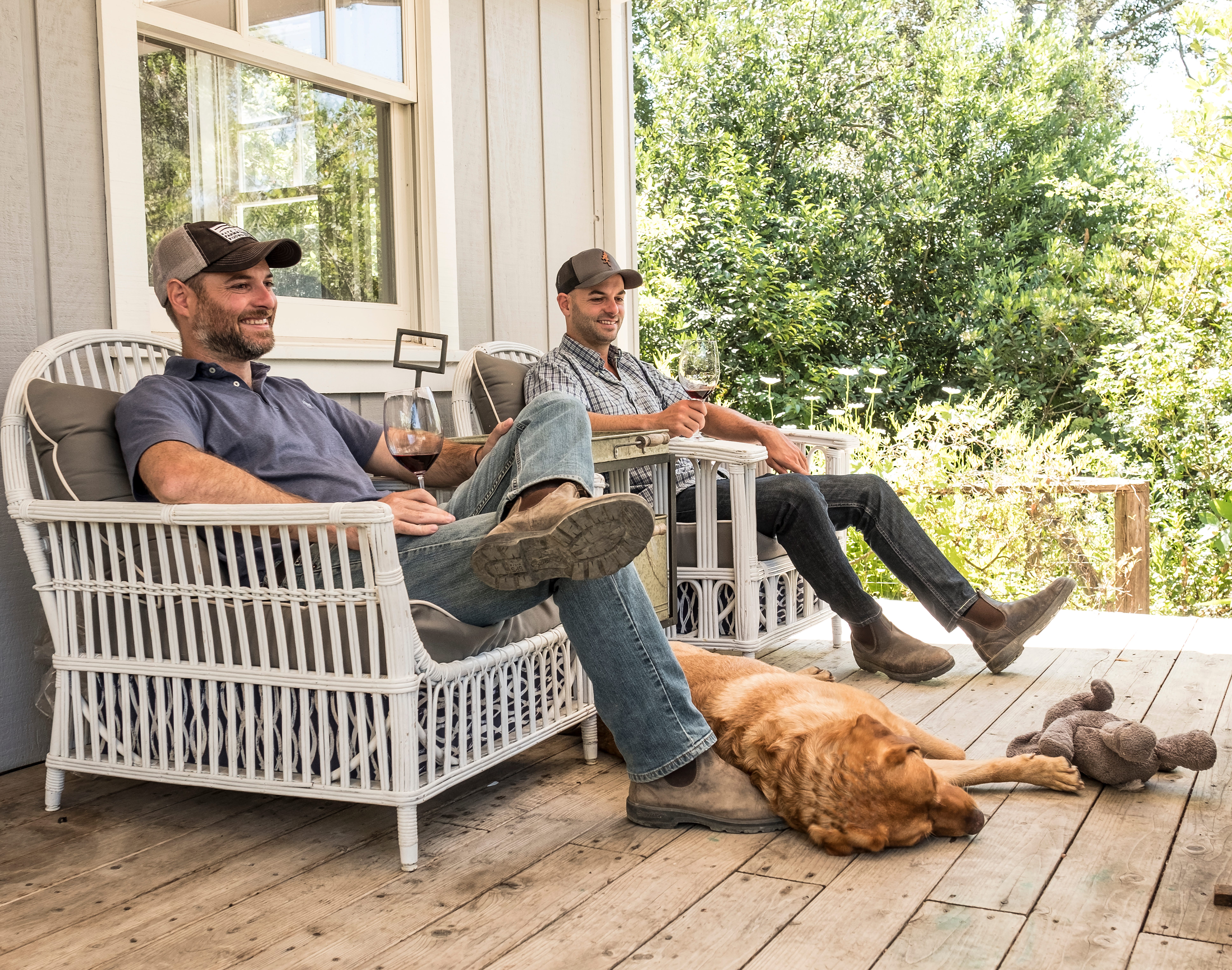
Mitch: Alex, thanks so much for joining! Let’s start with one question I ask everyone — what are 1-2 of your fondest wine memories?
Alex: One that comes to mind is with our grandmother, who was a huge influence. She lived to 97, so we had a lot of time with her and heard all these stories about her and the Mondavi’s, our grandfather farming the vineyard, and so on. As she got older, her short-term memory got a little shoddy, but her long-term memory was great. Every single night she’d have a vodka tonic at cocktail hour and two glasses of white wine at dinner—no matter what she was eating.
When my brother and I made the first vintage we felt was good enough to share—2008, which we never officially released—we opened a bottle at a family dinner at the house in Oakville. We put a glass of 2008 Cabernet in front of my grandmother and she said, “Wait—why is there red wine in front of me? I need my white wine.” We said, “Grandma, just try it and tell us what you think.” She tried it and said, “Wow, this is amazing.” We told her it was the wine we made from the family grapes, and she said, “Oh man, I knew I liked it for a good reason.”
Then about a minute later she said again, “Why is there red wine in front of me?” We got to relive that moment three or four times thanks to her short-term memory. It was funny and also special because my grandfather farmed the vineyard after he retired, and they always dreamed of someone in the family making their own wine. Sharing that with our grandmother was a big moment for us.
On the friend side: I studied abroad in Florence when I was 20. It was such a cool experience and a great culture for wine. The funny thing is: whatever was put on the table is what you drank. We’d go to mom-and-pop restaurants, and regardless of whether you ordered something that “should” go with red or white, they’d just put a carafe on the table. I couldn’t even tell you what the wines were. But having that food and wine with a bunch of 20-year-old kids studying abroad—those experiences got me into the idea that wine brings people together and creates lasting memories. It wasn’t about fancy wine or the best food—it was about good people and enjoying the company.
Once you’ve had that moment where you get excited about wine, you realize it’s about people and experience. A special bottle takes it to the next level, but usually you remember the story more than the individual flavors.
Mitch: Sometimes wine is just something good to drink—and that’s okay. You don’t need tasting notes and all that.
Alex: Exactly. It starts with: do you like it or not? Whatever you do from there is your journey. If you want to dig deep on tasting notes and break down wine like a Master Sommelier would, great—but it’s not for everybody. If you can’t pick out specific flavors, that doesn’t mean you can’t enjoy wine just as much. It’s about being open-minded and letting people enjoy things their way.
Mitch: Didn’t Robert Mondavi dislike “wine speak”?
Alex: I don’t know if he hated it, but there are stories. One friend told me a story: Mondavi threw a party at his house. Bob was sitting by the pool drinking red wine—with ice cubes in it. My friend said, “Mr. Mondavi, I can’t believe you’re drinking red wine with ice.” Mondavi said, “Well, it’s hot out and I wanted to drink red wine. So I put ice cubes in it. So what.” If somebody like that does it, maybe we can all take a step back from some of the pretentiousness.
Mitch: I saw an interview yesterday where Messi said he mixes wine with Sprite. Some wine people were losing it, but I think they do that in Spain.
Alex: There’s a drink called calimocho—fruity red wine with Coca-Cola. My first job out of school was in a tasting room pouring Mondavi wines, and at the end of the day you could take home open bottles. Someone told us about calimocho, so we tried it. I took a sip and thought, “This just tastes like Dr Pepper” haha. Not the most exciting drink, but everybody can find their fix.
Mitch: I also studied abroad in Italy and was influenced by Italian wines. My Dad lived in Rome for three years and was the first to introduce me to Italian wine, and my wife and I honeymooned in Montalcino and still visit often. Her favorite wine is Brunello. So long story short, my family loves their wines and their culture.
Alex: That aligns with me—my fiancée and I are getting married in Tuscany. People ask how many bottles of MacDonald we’ll bring. Zero. We’re drinking Italian wine! You don’t bring sand to the beach.
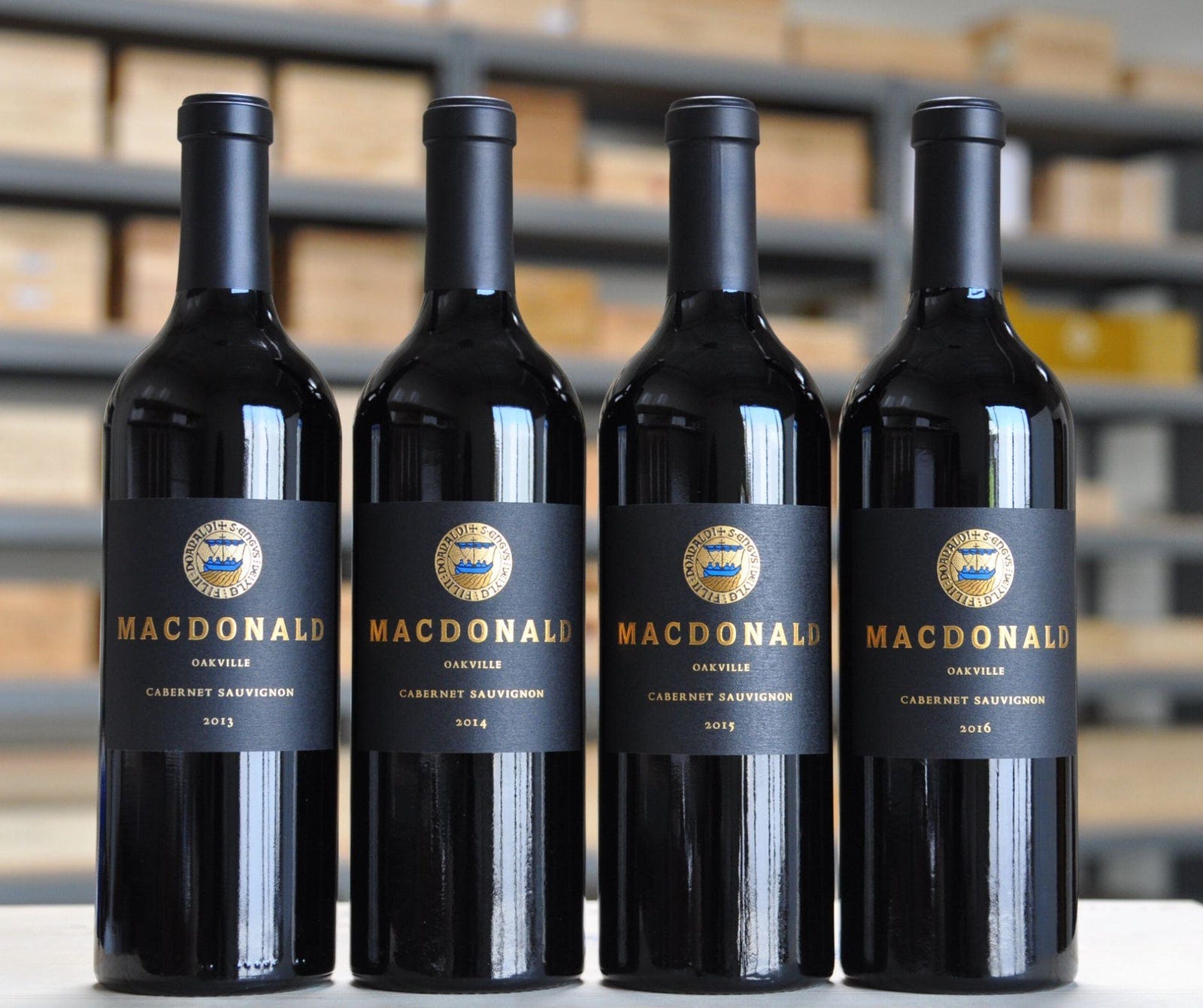
Mitch: I was part of a Mondavi Reserve tasting last year. We had a 1986 from a 3-liter, plus a mini-vertical from 1994-1997. Those would’ve been your family’s grapes, yes?
Alex: Yeah, for sure. And 1986 was my birth year, so I’ve had that one a bunch. It showed really well the last time I had it. The mid-’90s were such a great era for Napa. A lot of people who learned how to drink California wine started with those older Mondavi Reserves. Very cool that our vineyard was a big part of that.
Mitch: My birth year is 1994, and it was showing so well.
Alex: 94’s in Napa are showing super well right now. A lot of producers would say 1994 is one of the best wines they’ve made in their entire track records. It’s fun when you have a good birth year—it’s more exciting to drink great wines versus having to convince yourself something tough is worth it.
Mitch: What are your thoughts on the recent 2025 vintage?
Alex: I think it’s going to be a great vintage. We’ve been fortunate in Napa—2023, 2024, and 2025 all seem to be very strong qualitatively. 2025 feels a little more classic, which is cool. We like wines with more balance and restraint. It was a long, cool growing season, then we had rains coming in late September into early October. If you felt your fruit was ripe and ready by then, you made some awesome wines. A small percentage of people tried to push ripeness farther and didn’t quite get where they wanted to, but I think a majority of producers in 2025 were very happy.
Mitch: The outlook on the wine industry often feels negative. What are you most excited about for the future of wine?
Alex: I’m a positive guy. There’s the saying: glass half full, glass half empty. A buddy of mine says, “I’m just happy to have a glass.”
There are challenges in alcohol in general right now. People drank more during COVID, and now there’s a pendulum swing toward drinking less and focusing on health. Costs have gone up—wine and everything else. People are stepping back and asking what matters and what they truly love.
Here’s the positive: people are still drinking wine—they’re just drinking better stuff. Instead of a $10–$20 grocery store bottle every day, they’ll go to a wine shop and buy a $50–$100 bottle and open it on the weekend. They also want to learn more. Especially younger generations who are experience-based. They don’t just want a wine because a critic scored it—they want to know the people, the story, the history, and what makes a vineyard special. Education makes people appreciate things more.
It’s probably a tough time for inexpensive, mass-market grocery wines trying to sell millions of cases. The market is saturated. The opportunity is to focus on more interesting, higher-quality wines—more natural, not in the “flawed” sense, but natural as in not formulaic or over-manipulated. Make something delicious and unique. Consumers are driving that, at least in my circle.
Mitch: I see that too. There’s a local wine bar by us that’s been great at getting younger people into wine (shoutout to Bar a Vins). Cool aesthetic, fun vibe, but they also pour really good wine. You can be nerdy about it and really get into the wine, or you can just have a glass and say, “This is good” and enjoy the vibe.
Alex: Exactly. Wine has had too much pretentiousness and too high a barrier to entry. People are intimidated. If we break that down and give people permission to enjoy wine without feeling ashamed for not knowing enough, that’s huge.
Mitch: If you’re not drinking Napa wine, what do you like to drink?
Alex: A little bit of everything. I love Austrian and German whites—especially drier Rieslings and Gruner Veltliners. On my Mom’s side we’re of German descent, and we also have an uncle in the family from near the Wachau in Austria. He used to say that Austria makes the best wines in the world and Napa is just okay. So we told him to bring us more Austrian wines, and he started bringing bottles from his friends there. They’re fresh, delicious, and usually very reasonably priced.
Champagne is always a favorite. You think Champagne is just for celebrations—spraying it after winning a championship, New Years, whatever—then someone shares an epic bottle and you realize how great it can be.
Mitch: Any favorite producers?
Alex: If I had to pick one category, grower Champagnes are always super unique and delicious. One “aha” moment: a customer from the East Coast wanted a vineyard walk and tasting, but because of his schedule he wanted to meet at 9 a.m. I said that was aggressive for a tasting haha. He said, “I’ll bring a really nice Champagne” to make it up to me. He brought a 1990 Cristal—the first time I’d had a more aged Champagne. Still one of the best I’ve ever had. It was the perfect moment where you realize: good wine, properly aged, can be unbelievable.
Overall, I love wines from all over. I’m open-minded—if someone says they have a bottle of Northern Rhône, great. I’ve had cool bottles of Côte-Rôtie, Hermitage, and more. Trying wines from different places and learning from others helps you appreciate everything more.
Mitch: How does keeping an open mind and drinking through the different wines of the world help you as a winemaker?
Alex: It absolutely helps. Napa is one of the shortest-lived wine regions in the world. Italy, Spain, Portugal, Greece, France—they’ve been doing this for hundreds or thousands of years. We should all learn from each other, but you don’t have to copy. Napa was built by copying Bordeaux, and now it’s moved toward a more Burgundian approach—single vineyards, 100% Cab, more thoughtful site expression.
One example: one of my brother’s close friends, Guillaume—his family owns VCC in Pomerol. Every year near harvest we’d compare notes: what’s happening in Bordeaux, what’s happening in Napa. In 2011—our second year planning to release wine—we were nervous. Cool weather, rain in the forecast, not ideal. We told Guillaume and he started laughing. We said, “This is serious.” He said, “What you’re describing is every vintage in Bordeaux.”
We asked what to do. He said, “It’s simple: go through the rows with your shears. If you see mold or clusters that don’t look good, cut them off. Then everything that makes it into the winery will be great, and you’ll make a wonderful wine.” So simple, ha. Perspective from someone whose family has done it for generations helps a lot.
Mitch: Yeah, you’re blessed with that Pacific climate. The Atlantic/maritime climate is a different animal isn’t it?
Alex: They’ve got more challenges than we do. Napa has had more consistency, which helped us build a strong foundation for quality quickly. In Napa we might get eight great vintages in a decade. In Bordeaux you might get three or four. We complain about two out of ten being tough; in Bordeaux they’d say, “We got four great vintages—amazing.” We can learn from them on the business side, too—how to create stability.
Mitch: I’ve tasted a couple 2011 Napa’s recently, which has been a lower-rated vintage. But it’s been a mixed bag – I had a 2011 Dunn that was awesome. And then some that have been a little underripe/green.
Alex: 2011 was a vintage where if you picked before the rain, you made a great wine. After the rain you could get underripe, diluted flavors. But the funny thing is: people judge too early. Cabernet used to be: “Don’t even think about opening for 20 years.” Now nobody has the patience—or the cellar space. 2011s were more austere and tannic early on, but now—about 15 years later—they’ve rounded out and can be smooth and delicious, reminiscent of classic ’60s, ’70s, ’80s Napa. Never judge it until you open it.
Mitch: Back to MacDonald. Do you like or dislike the term “cult wine”?
Alex: Ha I’ve never been in a cult, so I don’t expect anyone to think our wine should be. I don’t know if it’s the right term, but I don’t strongly like or dislike it. I feel fortunate that people think what we’ve created is worth following in that way. I take that as a compliment.
The term came up in the Parker era—early Napa Cabernets getting 100-point scores: Screaming Eagle, Harlan, Colgin, Bryant, Dalla Valle—those kinds of wines. But times change. Some of those wines are very expensive now, and some aren’t as exciting as they used to be. The bigger question is: how do you create something people are excited about—and how do you keep evolving so you don’t get complacent and then 20 years later people move on?
Mitch: When you set out to do this, did you expect demand to get this crazy?
Alex: Nobody can start a business expecting it to go as well as it has. We had business plans and projections, and what we’re doing now wasn’t even the highest level in those projections. We’re very thankful. We started young—technically making wine before we were 21 for experimental purposes. I told my brother: by the end of our 20s, we’ll either have created a cool business we’re excited about, or we’ll have failed—but we’d still be in our late 20s and could pivot to whatever was next.
It’s harder to take the same risks later—when you’re in your 30s, getting married, starting families. So in some ways we were lucky to start when we did.
Mitch: Was there a specific moment when you realized, “This isn’t going to be a total failure”?
Alex: Someone asked me when we felt successful. Our goal is multi-generational: create something we can pass down to kids and grandkids. I still feel like we’re on the journey. We’ve had a lot of cool things to celebrate, and it’s important to recognize them, but the real success is building that next level.
Also, you’re only one bad vintage away from being in a tough spot. Mother Nature creates humility. You can put time and attention into making great wine, but you still need nature to cooperate. The first 10–15 years have gone great. I hope we do this for the rest of our lives and can say we didn’t fail over 50+ years.
Mitch: Tell me about the To-Kalon Vineyard. What makes it so special?
Alex: A lot, but at the core it’s about terroir and soil. Our To-Kalon vineyard sits at the base of an alluvial fan on the Mayacamas mountain range in Oakville. Two creeks ran along the sides of our property, and over hundreds of thousands—or millions—of years, they washed erosion from the canyon through the heart of our property. That created, in my opinion, some of the best soils for growing Cabernet.
Our vineyard is over 90% gravel by volume—the highest gravel content you’ll find anywhere in the world. It’s extremely well-drained. The vines struggle, and that leads to power and intensity in the fruit.
Geologically, there are fault lines that come together there, bringing a wide mix of material. So we have 90% gravel and some of the most diverse geology you’ll find anywhere in Napa. Those are ethereal components—you can’t just recreate them. It took an unimaginably long time for that to form, and then for Cabernet to be planted there and for Napa to become what it is.
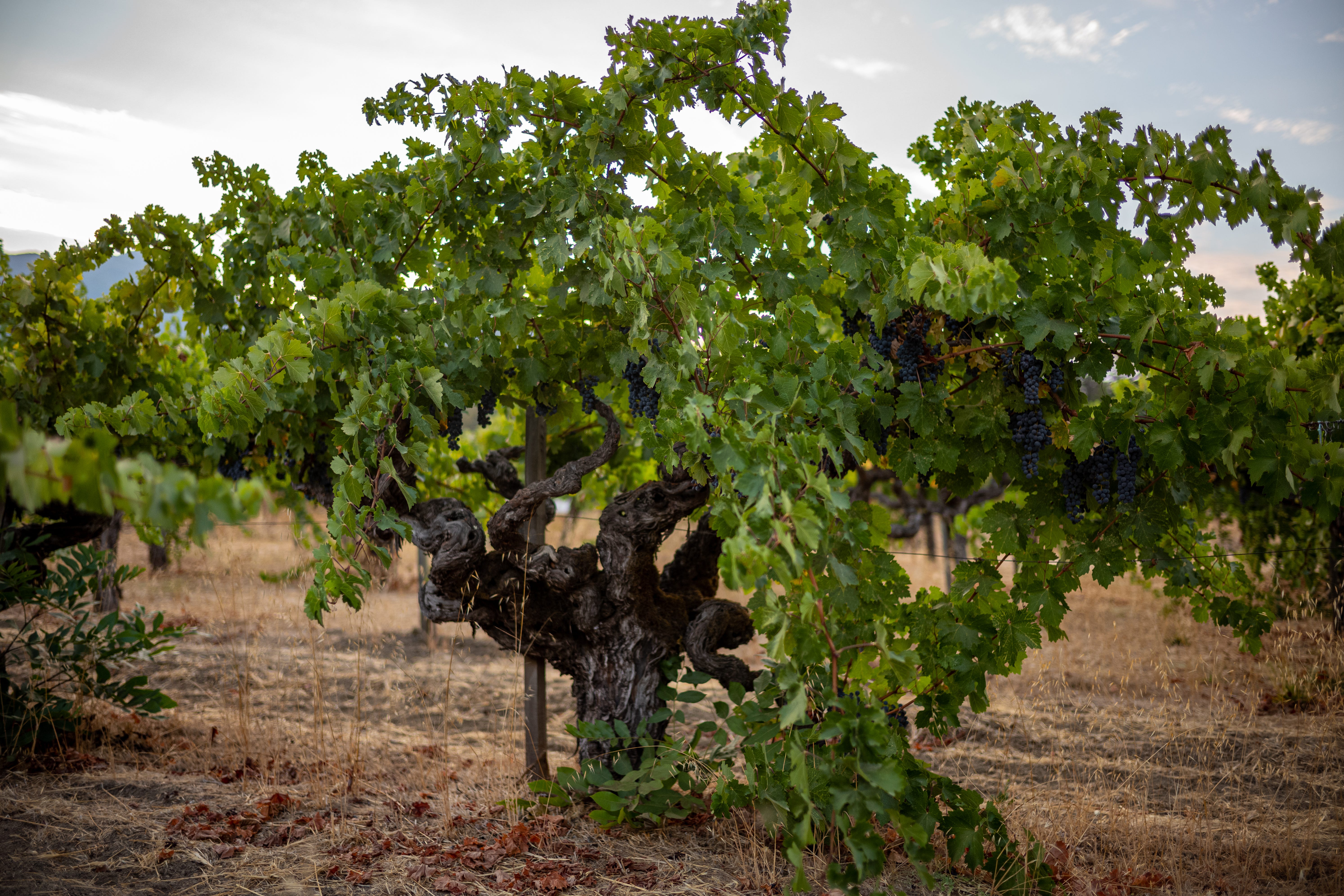
We also have old vines: 30, 50, and 70-year-old vines. On that kind of soil, it gives us the chance to make something unique. The more we learn about farming and winemaking, I think the wines from that area will get more consistent and hopefully even better over time.
Mitch: How old can those vines get before yields just aren’t enough?
Alex: They’re definitely low-yielding, but we think the quality is worth keeping. And there’s a familial connection: the oldest section was planted by our great-grandparents, and we never got to meet them, so farming what they planted is a cool connection.
The oldest Cabernet vines I’m aware of are in their 80’s—mostly Bordeaux and Australia. So there’s still lifespan left. If you walk our vineyard, it’s healthy and producing viable amounts, with exceptional quality. We have no intention of pulling vines unless there’s disease, virus, or something dies off. We handle those vine-by-vine to keep the rest of the vineyard in the best shape possible.
Mitch: There can’t be that many 70-year-old vines in Napa, right?
Alex: They’re among the oldest. Scarecrow, just north of us in Rutherford, has some older plantings. Other than that, many vineyards had issues with phylloxera or made the financial decision to pull out and restart. So it’s a unique thing to have in Napa.
Pictured below: one of MacDonald’s 70 year old vines, planted by their great-grandparents
Mitch: Alright let’s talk music. What kind of music do you like?
Alex: I love music. I’ve been playing guitar since third grade. Like wine, I like music from almost every genre. But classic rock is what I gravitate toward—especially as a guitarist.
I grew up listening to a lot of grunge. The first tape I ever bought was Nirvana’s Nevermind. I still love it, but as you start playing, you realize grunge is fun to listen to but not as complex to play—especially if you don’t have anyone to jam with.
I remember someone asked the guitarist from Pearl Jam about influences—Led Zeppelin, Eric Clapton, all these bands. They asked why grunge couldn’t create music as good as those guys, and he said, “Because we’re not as good as them.” I loved that answer: stay in your lane.
Two bands I listened to most growing up were Metallica and Guns N’ Roses. I still listen to a lot of that. I also love country music and blues—blues is just fun to play on guitar.
Mitch: Do you only play electric, or do you play acoustic too?
Alex: Both. I learned on acoustic, then went electric. I have a Taylor acoustic. Playing by yourself, I’ve realized I’m a guitarist who sometimes wishes he was a piano player—piano can be such a beautiful standalone instrument. I learned more classical fingerpicking on acoustic and love playing that when I can.
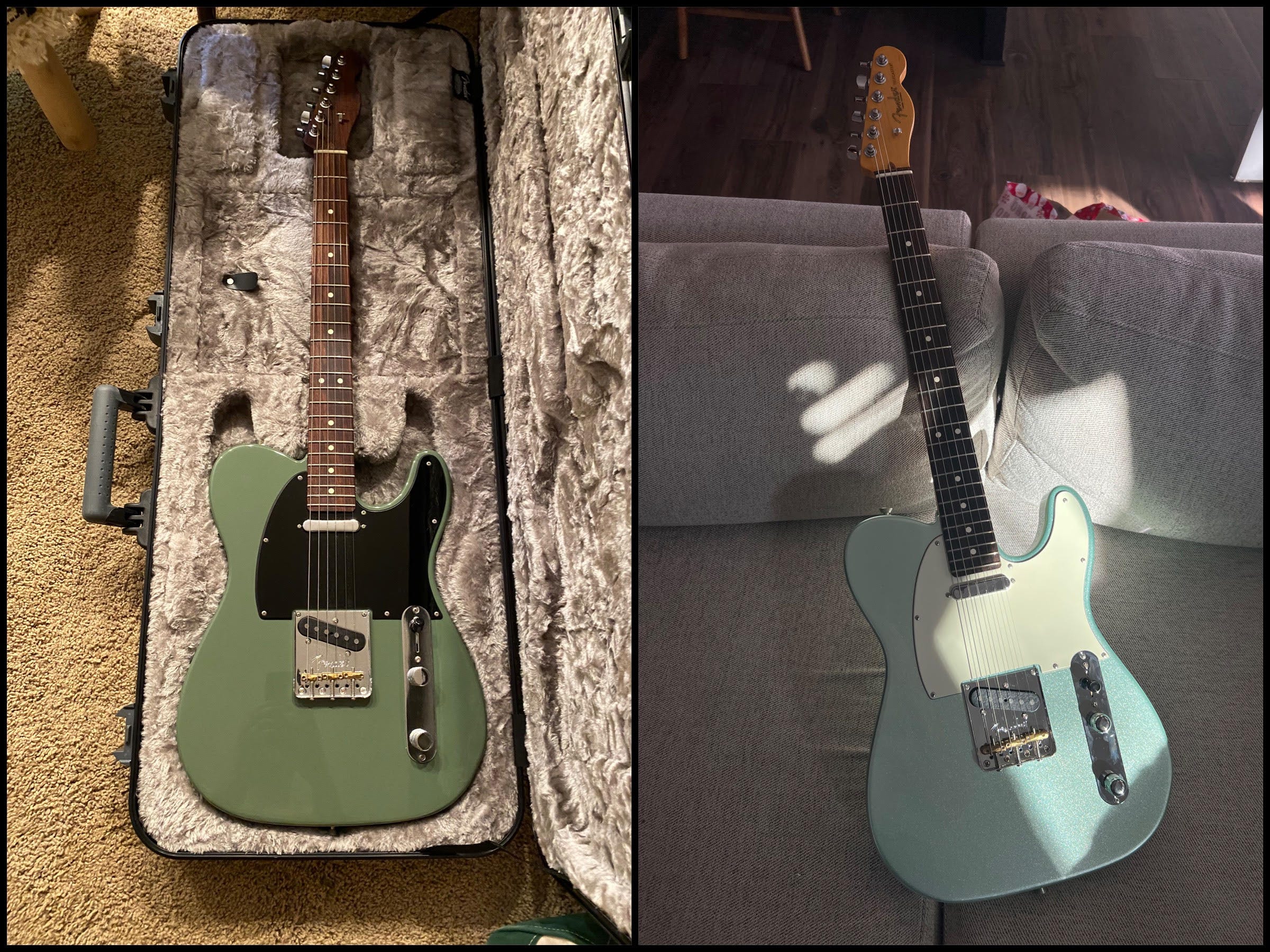
Mitch: I’m also a guitarist. Similar story: I started on acoustic lessons, got bored with that as a kid, and then started to get into classic rock. The first song I learned on electric was Tom Petty’s Mary Jane’s Last Dance. After college I went back to acoustic because it’s more fun when you’re just playing solo. But I always wanted a Fender Telecaster—specifically in surf green with the cream white pickguard—and my wife got it for me for Christmas (shoutout to Kara wife of the year). So I’ve been back on electric this past month.
Alex: That’s amazing. We have a similar story. I had an old Jackson for years, then got a Taylor because acoustic is easier to take places. A buddy of mine who’s a professional musician gave the best advice: don’t overthink preconceived notions, just go play a bunch and find a guitar that speaks to you.
Mitch: And I think people should approach wine the same way.
Alex: Yes! So I also ended up with a green Telecaster—darker than the surf green you have—and it’s super versatile. Then I looked at the rock stuff I love—Clapton, Zeppelin, Metallica, Guns N’ Roses—and realized many of them play Gibsons. I always thought the Gibson SG looked coolest, with the horns. I went into Guitar Center, played an all-black SG on consignment, and it felt like it played itself. I use the SG for heavier rock and the Tele for more subtlety.
Pictured below: Alex’s (left) and my (right) telecasters
Mitch: Thanks for your time Alex, I appreciate it so much. And thanks for making great wine.
Alex: Thanks for thinking of us, hopefully we can drink some wine together and play some guitar.
Closing thoughts: Really enjoyed this one. The MacDonald family, alongside the Mondavi’s, helped build Napa Valley into what it is today, and that fact combined with a 13,000+ person waitlist, I guess it’d be easy to get a big head. So I appreciate Alex’s authentic and unpretentious approach to wine. If you guys ever get the chance to drink some MacDonald, or some of the 80’s-90’s era Mondavi Reserve bottlings, you won’t regret it — they’re pretty special wines.
I’m also pumped to announce the next guest for Uncorked: Cathy Corison! Another Napa icon. Stay tuned. 🫡
I've been fortunate to spend some quality time with Alex at the vineyard on several occasions and it's always a great time. We were out there about 6 weeks ago and were blown away by how drinkeable the '23 was already.
This one was an awesome read. I love how much y’all have in common.
Given the ties to music and farming, it’s feeling to me like there’s a non-zero chance “Old MacDonald” is a song about one of Alex’s ancestors